September 2025 Quarterly Activity Report

September 2025 Quarterly Activity Report

1414 Degrees advances clean energy technologies and adds battery innovation to its portfolio

We have released our Quarterly Activities and Cashflow Report for the period ended 30 September 2025, highlighting a quarter of strong technical progress and strategic expansion.

All technical milestones were achieved under the SiBox® Development Agreement with Woodside Energy Technologies, retaining full ownership and control of SiBox intellectual property. The collaboration continues, with Woodside retaining a non-exclusive licence to the technology while supporting our SiPHyR® hydrogen and carbon capture development.

Meanwhile, we advanced SiBrick® storage media toward mass production — a core component of our Heat-as-a-Service model for industrial decarbonisation.

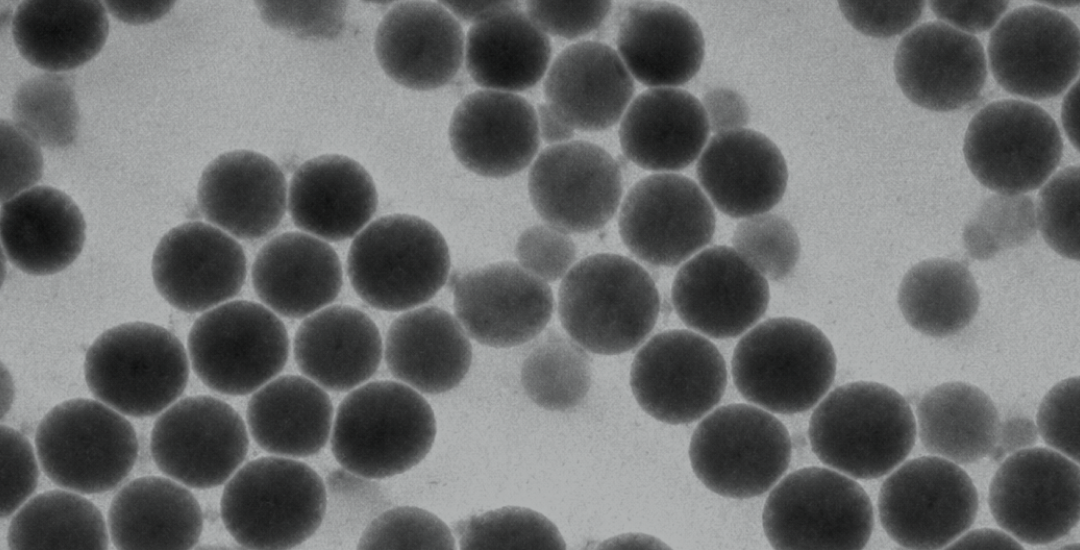
Following quarter-end, we acquired an exclusive global licence for the SiNTL™ aluminium-coated silicon nanoparticle technology, developed at George Washington University. SiNTL has potential to deliver significant advances in lithium-ion battery performance with up to ten times the theoretical capacity of graphite anodes.

A development and commercialisation program for SiNT has begun, including integration with our SiPHyR® technology to create a single-step pathway for high-value battery materials.

A $1.214 million capital raise was completed post quarter-end to fund SiNTL development and the Aurora BESS Project, while a $492,526 grant was secured to advance SiPHyR catalyst work with the Universities of Adelaide and Queensland.

Executive Chair Dr Kevin Moriarty said these milestones demonstrate 1414 Degrees’ momentum as it builds a diversified portfolio of silicon-based energy technologies.

“Our portfolio now spans heat storage, hydrogen and battery materials. Each of these technologies contributes to our goal of enabling cleaner, more efficient energy for industry and transport.”

Read the full ASX Quarterly Report here.

Hannam & Partners upgrades 1414 Degrees valuation

Hannam & Partners upgrades 1414 Degrees valuation

Hannam & Partners upgrades 1414 Degrees valuation following silicon nanoparticle technology acquisition

London-based investment bank Hannam & Partners has released updated research coverage on 1414 Degrees Limited, raising its target valuation following the recent acquisition of silicon nanoparticle technology and successful capital raise.

In its latest research note dated 15 October 2025, Hannam & Partners highlighted several significant milestones that expand 1414 Degrees’ technology portfolio and strengthen its path to commercialisation.

Expanding into Battery Materials

The research emphasises 1414 Degrees’ strategic acquisition of a global licence for silicon nanoparticle technology from George Washington University. The SINTL™ process addresses a critical weakness in lithium-ion battery anodes – volume expansion and instability during charging cycles that typically degrades battery performance over time.

Hannam & Partners noted potential synergies with 1414 Degrees’ hydrogen pyrolysis reactor (SiPHyR®) technology, which produces carbon that could be blended within the SiNTL process. This integration could produce a high value product from the SiPHyR carbon. OEM engagement is scheduled to commence in Q4 2025, with sample testing to follow in Q1 2026.

Strong Capital Support

A $1.2 million placement at A$0.042 per share, with free attaching options exercisable at A$0.05 expiring two years from issue was made. Proceeds will advance the SiNTL technology, progress the Aurora Battery Energy Storage System (BESS) project, and support general working capital requirements.

SiBrick Variants Advance Toward Mass Production

Hannam & Partners’ research confirms continued progress on 1414 Degrees’ SiBrick® thermal storage media, with multiple high-temperature variants now validated:

Updated Valuation

  • The research acknowledges that both the Aurora project and SiPHyR technology could drive significant further upside to the valuation, particularly as 1414 Degrees transitions to a solutions provider selling a “heat product.”
  • Hannam & Partners initiated coverage of 1414 Degrees in October 2023, identifying the Company as a standout player in the thermal energy storage sector. The bank’s continued research coverage reflects growing institutional interest in 1414 Degrees’ expanding portfolio of decarbonisation technologies.

Read the research report here


Unveiling our integrated technology platform for next-generation battery materials

Unveiling our integrated technology platform for next-generation battery materials

We have announced a significant technological breakthrough that positions us as a key player in the rapidly expanding battery materials sector. The integration of our SiNTL™ and SiPHyR® technologies opens a pathway to high-performance graphitic anode material for lithium-ion batteries.

Our collaboration with the George Washington University has identified a potential single-step manufacturing process that could transform a hydrogen production by-product into premium battery material while simultaneously reducing production costs.

Streamlining Battery Material Production

Our integrated approach combines SiNTL aluminium-coated silicon nanoparticles with carbon generated from our SiPHyR methane-pyrolysis reactors. This represents a significant departure from conventional technologies that rely on crystalline silicon requiring protective coating layers applied in separate steps before being mixed with graphite.

Our integrated approach may lower production costs by eliminating multiple coating and mixing steps typical of conventional processes. By controlling both proprietary silicon technologies, we maintain oversight of intellectual property and the supply chain across this emerging value proposition.

Massive Market Opportunity

Our strategic timing aligns with explosive growth projections for the silicon-anode battery market, forecast to expand from USD $536.5 million in 2025 to more than USD $20.8 billion by 2034. This represents a compound annual growth rate exceeding 50 percent, underscoring demand for technologies that improve performance, scalability and cost-effectiveness.

Development Timeline

We’ve outlined an ambitious testing schedule in collaboration with the George Washington University, with laboratory facilities to be upgraded to accelerate development and testing protocols.

Additional battery test channels are being established to increase the number of anode cells that can be cycled up to 1,000 times. Our development roadmap targets properties of approximately 500 mAh/g for graphite-silicon composites within three months, escalating to 600 mAh/g within twelve months as silicon nanoparticle content increases.

These materials will be prepared for testing by battery Original Equipment Manufacturers (OEMs), a critical step toward commercial validation.

Building an Integrated Silicon Ecosystem

The SiNTL technology acquisition has expanded our portfolio into a comprehensive suite of silicon-based energy and materials technologies. Our SiBrick® thermal energy storage platform serves as the foundational enabler, storing renewable electricity as high-temperature heat.

This thermal backbone powers both our SiBox industrial heat replacement system and our SiPHyR hydrogen production platform. The addition of SiNTL nanotechnology for battery anodes creates potential for multiple revenue streams across renewable heat, clean hydrogen and advanced battery materials.

Our SiBox system can potentially support pre-processing or sintering of SiNTL anode material at temperatures exceeding 2,000°C, further demonstrating the synergies within our integrated technology platform.

Next Steps

We will be producing combined SiNTL-SiPHyR anode materials for rigorous testing and validation. Success in meeting our stated performance targets could position us to capitalise on the surging demand for advanced battery materials as the global energy transition accelerates.

Read the full ASX release

Unveiling our integrated technology platform for next-generation battery materials

SiNTL commercialisation now underway

We have commenced commercialisation activities for our SiNTL aluminium-coated silicon nanoparticle technology following execution of the exclusive global licence with the George Washington University (GW).

We are working with GW to fabricate SiNTL samples and refine the synthesis process ahead of engagement with Original Equipment Manufacturers (OEMs). In parallel, we are assessing the potential to establish in-house anode material manufacturing capabilities.

This dual-track approach maintains strategic flexibility to pursue either OEM partnerships or direct production, whichever pathway delivers the strongest long-term value as global demand for advanced silicon-anode materials accelerates.

Performance advantages

SiNTL follows a low-cost, low-temperature (125-180°C), scalable synthesis process delivering approximately ten times higher theoretical capacity than graphite anodes and the potential for greater energy density, faster charging and longer cycle life.

The one-pot aluminium-coating process offers a simple, scalable route to high-performance, ESG-aligned battery materials compatible with existing production infrastructure.

Full value chain participation

Carbon produced by 1414 Degrees’ SiPHyR® reactors is being evaluated by GW for potential use in battery anodes, supporting the Company’s aim to capture maximum value across the supply chain.

Executive Chairman Dr Kevin Moriarty said: “We’re progressing rapidly to bring SiNTL to market. Our collaboration with GW ensures we have continued access to the technology’s inventors and specialist know-how while we evaluate both OEM integration and potential in-house production.

“This flexibility means that whichever route we choose, we’ll be ready to move quickly and capture maximum value for shareholders. We see this as the foundation of a long-term battery materials capability for Australia.”

Funds from the Company’s recent strongly supported Placement are being directed toward SiNTL development activities and commercialisation planning.

Read the full ASX Release here.

Expansion into next-generation battery materials with breakthrough silicon nanoparticle technology

Expansion into next-generation battery materials with breakthrough silicon nanoparticle technology

We have taken a major step into the next generation of clean energy storage, securing an exclusive global licence from The George Washington University (GW) for a breakthrough silicon nanoparticle technology (SiNTL) designed to improve lithium-ion battery performance.

Developed by Professor Michael Wagner’s team at GW, the SiNTL nanotechnology uses a low-temperature, single-step process to produce air- and water-stable aluminium-coated silicon nanoparticles, avoiding hazardous gases and reducing production complexity.

The innovation could enable up to 10 times higher theoretical capacity than graphite anodes, with potential benefits including faster charging, higher energy density, and longer cycle life.

Expanding the 1414 Degrees silicon platform

The SiNTL licence adds to 1414 Degrees’ silicon technology portfolio, which already includes SiBox® for long-duration heat storage, SiBrick® for industrial heat and hydrogen, and SiPHyR™ for clean hydrogen production — positioning the Company across multiple clean energy markets.

“SiNTL’s novel silicon nanoparticle technology could overcome the key limitations of silicon anodes — volume expansion and instability,” said Dr Kevin Moriarty, Executive Chairman.
“It’s a compelling opportunity to diversify into the global battery market while building on our deep silicon expertise.”

There is a planned accelerated commercialisation pathway, with sample production by GW through to early 2026 and OEM engagement to begin later this year.

Market opportunity and funding

The silicon anode battery market is projected to grow from USD $536.5 million in 2025 to more than $20.8 billion by 2034 (CAGR ~50%), creating a major opportunity for scalable, low-cost technologies like SiNTL.

We have completed a $1.214 million capital raise to support the SiNTL development program and working capital. The placement was oversubscribed, with strong backing from both existing and new institutional investors.

Funds will be used to progress SiNTL sample fabrication, OEM engagement, and commercial readiness.

About SiNTL

  • ~10× higher theoretical capacity than graphite anodes

  • Low-cost, scalable process using no hazardous gases

  • Stable, conductive aluminium coating improves performance and safety

  • Compatible with existing battery manufacturing lines

  • Potential applications across EVs, grid storage, electronics, aerospace, and industrial sectors

Read the ASX Release here.

Annual Report FY25

Annual Report FY25

Strong progress toward commercial deployment announced in  FY25 Annual Report

We advance from demonstration to commercial readiness across multiple clean energy technologies

Today we released our FY25 Annual Report, highlighting significant momentum as we transition from demonstration phase to commercial deployment across our portfolio of innovative energy storage and hydrogen solutions.

The year represented a pivotal period for 1414 Degrees, successfully moving beyond technology demonstration into commercial readiness across several key platforms. The 2025 financial year has been one of both consolidation and forward momentum. We have moved beyond demonstration into commercial readiness across several of our technologies.

Heat-as-a-Service model gains market traction

Our Heat-as-a-Service (HaaS) business model underwent significant refinement during FY25, with support from Deloitte’s financial modelling capabilities. This approach allows industry to access renewable heat without needing specialised energy market skills. It’s gaining real traction among energy-intensive manufacturers.

Testing with prospective customers has demonstrated that our HaaS model can deliver renewable heat solutions that are already cost-competitive with traditional gas heating, positioning us to capture market share in the industrial decarbonisation sector.

SiBox Technology Proves Commercial Viability

A major milestone was achieved with the completion of feasibility work for a 10 MWh SiBox pilot installation at a New South Wales factory. Results to date confirm that SiBox can deliver clean, dispatchable heat that is already cheaper than gas.

Our SiBox technology provides industrial users with clean, controllable heat through an integrated energy management system that transforms intermittent renewable electricity into steady, reliable thermal energy for industrial processes.

SiPHyR Hydrogen Technology Delivers Breakthrough Results

Our SiPHyR turquoise hydrogen program achieved significant technical milestones during FY25. In May 2025, a technical workshop with partners Woodside Energy Technologies, the University of Adelaide and RMIT confirmed promising results: methane conversion efficiencies above 70%.

This breakthrough in methane pyrolysis technology, which produces both hydrogen and valuable solid carbon products, positions us at the forefront of clean hydrogen production. The program has been strengthened by additional grant funding, including a $492,526 AEA Ignite grant during the year, building on the $2,500,000 CRC-P program already in place.

Aurora Energy Precinct Advances Toward Construction

Development of our Aurora renewable energy project near Port Augusta progressed significantly, with the 140 MW / 280 MWh battery energy storage system (BESS) advancing through critical development milestones. Aurora continues to be central to our vision: anchoring renewable generation, long-duration storage, and industrial decarbonisation.

Strategic outlook for FY26

Looking ahead, we have outlined clear objectives for the coming financial year:

  • Deploy a commercial SiBox pilot in an industrial setting to demonstrate full-scale commercial operation
  • Advance Aurora toward construction readiness through completion of connection approvals and final project structuring
  • Progress SiPHyR from laboratory to pilot-scale demonstration, targeting high hydrogen output and commercial-grade solid carbon co-products
  • Expand customer agreements under the proven HaaS model to build recurring revenue streams

Strong technology validation supports growth

Executive Chairman Dr Kevin Moriarty noted our strong position for translating technological potential into commercial impact. With solid technology validation, market-ready business models, and grant-assisted R&D, we are well-positioned to translate our potential into real-world impact.

The FY25 results demonstrate our successful transition from a research and development phase company to one with commercially validated technologies ready for deployment in the rapidly growing industrial decarbonisation market.

Access the full Annual Report and ASX announcement: