
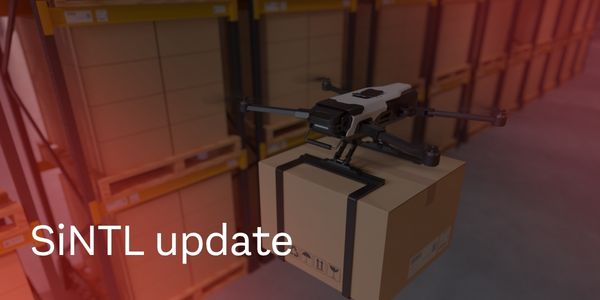
SiNTL moves from lab to market: scale-up and full-stack battery development underway
We have commenced the scale-up phase of our SiNTL™ silicon nanoparticle anode program – a significant step in transitioning from laboratory-scale development toward commercial engagement.
We are purchasing scale-up equipment to produce manufacturer-relevant quantities of SiNTL anode material at our research partner George Washington University (GWU) in Washington D.C., where Professor Michael Wagner’s team continues to lead the technical program under an exclusive global licence.
Scale-up is designed to deliver improved material consistency and meaningfully larger production volumes: both prerequisites for the formal third-party evaluation and OEM qualification processes that characterise this stage of commercialisation.
Learn about SiNTL battery materials.
Full-stack battery development
In parallel, we have commenced engagement with full-stack contract battery manufacturers to produce complete battery cells incorporating SiNTL anode material, optimised for drone, UAV, satellite, robotics and other target applications. These cells are intended to provide tangible real-world performance data for commercial and defence-sector qualification processes.
The drone and UAV market presents a compelling near-term entry point for SiNTL. These platforms place a high premium on energy density, payload capacity and rapid recharge – performance characteristics that SiNTL’s silicon anode approach is designed to address. The global commercial and military drone market is forecast to reach approximately US$160 billion by 2030, with the silicon anode battery market alone projected to grow from USD 0.4 billion in 2025 to USD 25.8 billion by 2035.
Market interest and OEM engagement
We have received inbound interest from companies seeking to trial SiNTL materials and have commenced discussions with drone and related industry participants – an early market signal that reinforces our commercialisation direction.
Progressing toward 600 mAh/g
Formulation optimisation and cycle life validation continue, with development advancing toward our initial 600 mAh/g target – more than 50% above conventional graphite anodes and approximately 20% above current commercial silicon-enhanced anode benchmarks.
Our production process – a low-temperature, single-step synthesis with approximately 97% demonstrated yield – is compatible with conventional lithium-ion battery manufacturing lines and avoids hazardous reagents such as hydrofluoric acid or silanes. This supports a credible path to scaled production and a clear point of differentiation from competing silicon anode technologies.
To support the next phase, we are actively seeking industry experts in battery materials commercialisation, OEM engagement, and defence and aerospace market development.
CTO Peter Yaron said:
“The commencement of scale-up is a natural and planned next step for the SiNTL™ program. We have demonstrated the performance of the material at laboratory scale and the focus now shifts to producing consistent, higher-volume quantities that enable formal third-party evaluation and meaningful OEM engagement. This is how laboratory results become commercial outcomes.”