Aurora Energy Project BESS status update

Aurora Energy Project BESS status update

1414 Degrees Ltd would like to provide an update on the Aurora Energy Project following the recent takeover of OZ Minerals Ltd (OZ Minerals) by BHP Group Ltd (BHP).

Key Updates:

SiliconAurora Joint Venture: Our joint venture with Vast (50:50), continues to make progress on the 140MW battery energy storage system (BESS) project. We have secured a letter of intent with a major battery supplier, ensuring the project’s equipment needs.

Generator Performance Study and Approvals: The generator performance study is nearing completion, expected in the second week of June. Government, environmental, and statutory approvals are well advanced.

DNA Agreement and Transmission Line: The transmission line was designed to service the proposed Solar Reserve 220MW solar generation project as well as OZ Minerals’ mines. It therefore has a large power capacity. With the exit of Solar Reserve, OZ Minerals continued with a private Dedicated Connection Asset (DCA) owned by Electranet. In order for SiliconAurora to access the transmission line, it requires conversion from a DCA 275kV private line to a shared Designated Network Asset (DNA). Progress on the DNA agreement to convert the transmission line is contingent upon discussions with BHP, the new owners of OZ Minerals.

Increased Security of Supply: The BESS project enhances power supply security without significantly impacting availability. It is designed to contribute to a more resilient energy ecosystem.

Timeline for Site Works: Site works are now scheduled to commence in early 2024 due to recent ownership changes and ongoing discussions with BHP.

We are committed to the success of the Aurora Energy Project and will provide further updates as necessary.

Heavy industry calling for solutions to achieve net zero

Heavy industry calling for solutions to achieve net zero

Last month the Australian Industry Group (Ai Group®) released a statement that sums up heavy industry’s commitment to identifying the right solutions to achieve net zero emissions.

The Collective Statement on Heavy Industry Supply Chain Transition to Net Zero Emissions is supported by some of the biggest names in heavy industry in Australia.

It reaffirms what we know in that – Australia’s heavy industry supply chains could transition to net zero emissions – but that the pathway to achieving this will be complex and challenging.

It has been three years of effort that has transformed our technology into the most advanced replacement for fossil fuels in high temperature industrial processes.

We’re proud to have recognised this demand early on and we’re committed to delivering thermal energy storage solutions and products to replace fossil fuels globally!

We are encouraged Ai Group’s statement and look forward to commercialising our technology, which will directly contribute to decarbonising heavy industry.

To achieve it, we’ll be continuing and expanding on our partnerships with business, investors and government (just as this statement suggests is important).

Read the full statement here: Collective Statement on Heavy Industry Supply Chain Transition to Net Zero Emissions | Ai Group


SiBox™ Demonstration Module – successful performance using 14D silicon brick

SiBox™ Demonstration Module – successful performance using 14D silicon brick

  • SiBox performing to expectations for supply of very high temperature industrial heat
  • 14D Brick successfully harnesses latent heat of silicon for stability and energy density

1414 Degrees Limited reports the results for the first full-cycle performance testing of the SiBox™ Demonstration Module (SDM).

Performance testing is designed to provide important data to demonstrate how SiBox™ will deliver value for customers – informing the Company’s commercialisation strategy to deliver clean heat to heavy industry.

The SDM’s first full cycle of commissioning tests demonstrated its ability to store energy from electricity and output a clean, consistent stream of high-temperature heat through its energy recovery system.

The latent heat of silicon was key to achieving a successful initial run which delivered a stable stream of heat above 800°C without the need for a temperature control system. Further runs, using the control system, delivered longer and more stable runs, consistently supplying clean heat at set points of 700°C and 800°C as shown in Figure 1 below. The stabilising contribution of silicon’s latent heat in the 14D Brick is seen in the flat portions of Figure 2. Sensible heat storage cannot intrinsically provide a stable hot air output.

These results align with expectations from engineering models. Ongoing trials aim to optimise the control system, improve performance, repeatability and enable long-term operational testing.

The goal for future trials is to:

  • demonstrate stable heat supply up to 900°C and
  • inform future SiBox™ development to supply hot air up to 1000°C powered by 14D Brick at temperatures above 1400°C.


Additional information:

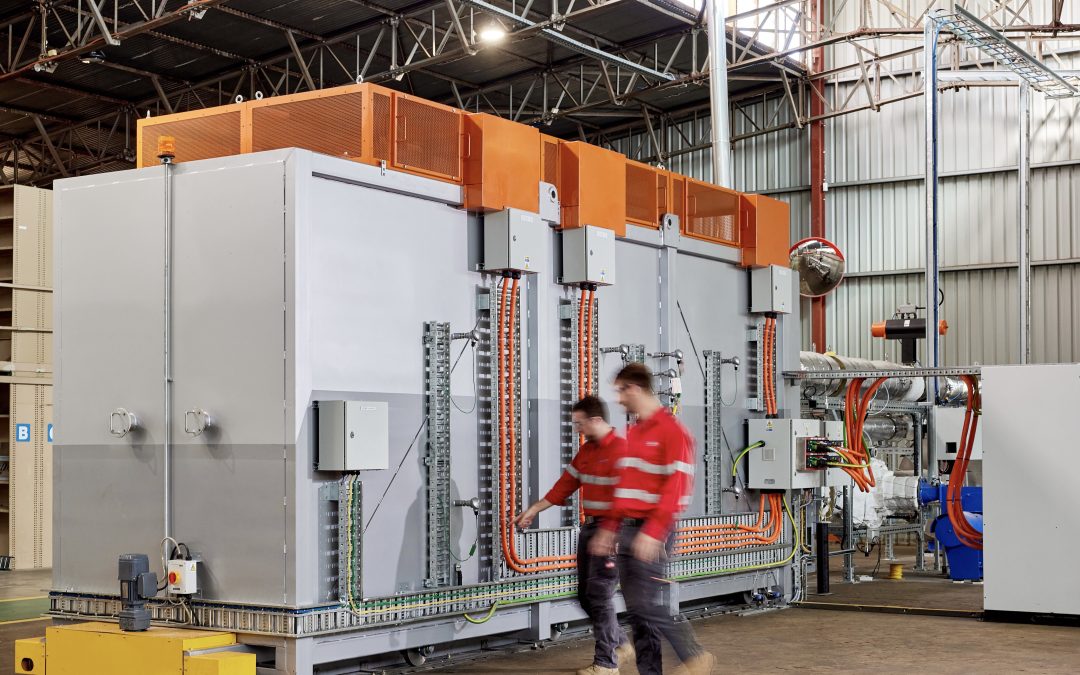
1414 Degrees’ SiBox™ has completed multiple trials at different operating temperature setpoints to demonstrate its versatility in delivering clean heat that can be tailored to meet the diverse requirements of various industries. These trials were carried out at different output temperature setpoints, including 700°C with active control, 800°C with and without active control, as well as shorter trials at 600°C and 650°C, which aimed to test and refine the control system functionality. The figures provide visual representation of some of the results obtained from these trials. The internal brick storage media was electrically heated before each test, and no further charge was added during the trial to ensure that only stored heat was used. Air passing through the SiBox™ is heated by contact with walls of 14D Bricks then circulated through a heat exchanger to simulate a process heat load before being recirculated through the SDM. The silicon phase change material in the storage media cools and solidifies, releasing stored latent heat at a constant temperature as shown in Figure 2. This process ensures heat transfer inside the SiBox™ is self-regulating, providing the passive control of the outlet temperature demonstrated in the results. The outlet temperature of the SDM can also be actively controlled to meet specific application requirements. Figure 3. Components of 1414 Degrees SiBox Demonstration Module. The SDM’s modular thermal storage unit (left rear) is designed to be replicated for scale up in very large future systems

March Quarterly 2023

March Quarterly 2023

1414 Degrees has made significant steps to commercial success in this quarter, commencing commissioning of the SiBox™, revealing our high energy density silicon brick walls in the SiBox™, and progress toward a mass producible silicon brick product. Three years of effort has transformed our silicon technology into the most advanced replacement for fossil fuel in high temperature industrial processes.

The Aurora Energy Project is nearing major milestones on the path to revenue. The generator performance study to connect a battery energy storage system (BESS) to the National Electricity Market (NEM) network is scheduled for completion in May, and a term sheet for sharing of the 275kV transmission line with OzMinerals is being finalised. Following this the SiliconAurora JV partners will commission a major professional services firm to prepare the business case for financing.

Hundreds of our 14D silicon bricks were built into walls within the SiBox™ and heated to over 1414°C.  Our current choice of silicon phase-change material (PCM) allows SiBox™ to supply constant temperature clean air up to 1000°C, meeting the temperature requirements of most industries. However, the PCM could be varied to deliver even higher temperatures.  SiBox™ represents a significant advance in thermal energy storage technology, providing a compact “plug and play” design with high energy density and efficient heat transfer properties. Other energy storage products utilising storage media such as sand or concrete have unfavourable thermal properties, and we are not aware of a technology that can compete with the performance of SiBox™.

During the quarter we revealed that the internal structure of SiBox™ facilitates scale up of energy storage by extending the internal walls of brick, while also allowing for simultaneous discharging of heat even while charging from the grid or renewable sources. The current quarter will see our team providing the first performance data for the SiBox™, and we will then engage an independent engineering firm to prepare a report to assist in securing access to an operating site for a SiBox™ commercial pilot.

Our commercialisation team analysed data received from large companies interested in reducing emissions and costs of production. These industries require very high temperature heat provided in a stable controlled fashion to produce their steel, cement, and aluminium – products that are the backbone of societal infrastructure. Currently most of this heat is provided by burning gas and other fossil fuels. The successful commissioning of our SiBox™ in the next quarter will provide a viable alternative that can partially or completely replace gas burning with a stable supply of ~1000°C clean air powered from renewable electricity.

High prices and gas supply constraints are bringing forward our commercialisation time frame. Our analysis of the data provided by industry indicates that SiBox™ is already competitive with fossil fuel in some countries and will become increasingly so in the next 2 to 5 years as we scale up with a mass producible brick product. We have therefore accelerated engagement with industry partners to select an operating site for the next generation commercial SiBox™. This will be built and sized as a commercial pilot, possibly providing up to 100 MWh of usable stable heat over 8 or more hours.

We expect to augment our existing funding from government and industry partnerships to fund the next SiBox™ pilot, and will commence its design as soon as our engineers and an independent consultant have verified the performance of the current demonstration module. We anticipate attracting substantial grants from industries and governments that are interested in emissions reduction technologies for the future.

Overall, we are making significant strides towards commercial success.

SiBox™ Technical Development 

As announced during the quarter, the 14D Brick silicon based storage media in the SiBox™ Demonstration Module (SDM) underwent its first heating to 1414°C and on inspection proved to be in excellent condition consistent with our expectations. A representative sample was removed for further analysis to provide a benchmark of material properties and performance over time.

Significant progress was made in commissioning the SDM. The initial results are consistent with expectations of the engineering models. Once the ATMS is optomised and commissioning is complete, the team will commence a 12-month validation test to assess the performance of the SiBox™ system and thermal storage media performance.

We are working with our current industry partners and potential end users to optimise the SiBox™ solution for their applications as well as incorporating lessons learnt from construction and commissioning of the SiBox™ Demonstration Module to improve future iterations of the SiBox™ technology.

The SiBox™ Demonstration Module is designed to capture all the features and information needed to physically validate engineering design tools, minimise risk and increase technical confidence in the SiBox™ technology to ready it for commercial use. The SDM comprises an insulated heat store built from walls of 14D Bricks, a heating system and an energy recovery system designed to replicate commercial applications. It is controlled by an Advanced Temperature Management System (ATMS). The equipment specifications and designs for the Demonstration Module can be scaled to build long duration thermal storage solutions for industry.

Commercialisation 

SiBox™ thermal energy storage targets cost-efficient electrification and renewable penetration of even the hardest-to-decarbonise industrial sectors.  To achieve this our analysts have built computer models of SiBox™ performance with energy dispatch algorithms to determine the cost of electrically sourced heat energy compared to fossil fuels in industry. During the quarter target industries supplied proprietary data on their energy intensive processes that our analysts have been incorporating into the commercial models. The results Indicate a faster path to commercial viability  for SiBox™ than anticipated. To meet this challenge, we need to accelerate development of new versions of our mass producible silicon bricks for future commercial SiBox™.

The Long Duration Energy Storage (LDES) Council found that firming green heat with cost-efficient thermal storage solutions can have significant system-wide monetary benefits globally. Our commercial strategy is to integrate SiBox™ into industries that are key to realising cashflow potential from decarbonising heavy industry. Our team is currently assessing opportunities in high temperature heavy industries, both internally and in conjunction with the Heavy Industries Low-Carbon Transition Cooperative Research Centre (HILT-CRC) led-by University of Adelaide. We are engaging with alumina, cement, and lime producers in Australia and globally to identify a site for a commercial-scale SiBox™ pilot installation.

 Aurora Energy Project   

The SiliconAurora joint venture (50% 14D) with Vast Solar continues to advance the battery energy storage system (BESS) project. A letter of intent was issued to a major battery supplier. Government, environmental and statutory approvals are well advanced, terms for an agreement to connect to the 275 kV transmission line are awaiting confirmation by the parties.

Consultants Emanden and AECOM are expected to complete the generator performance study in May for submission to Electranet which will lead to an application to participate in the National Electricity Market. The JV partners intend to retain a big four professional firm to obtain updated revenue modelling and prepare the business case for financing. It is anticipated that site works will commence in the later part of 2023 and construction of the battery will follow. Future stages allow Vast Solar and 1414 Degrees to construct and connect their respective solar capture and storage technologies to the NEM.

Finance 

1414 Degrees ended the quarter with $2.7 million in cash, an increase of $1.6 million. Receipts included a $300,000 placement to a venture fund of 3 million shares at 10 cents a share.

As required by ASX Listing Rule 4.7C3, the Company notes that $55,000 was paid to related parties during the quarter. These payments were Directors Fees.

SiBox is competitive with fossil fuel

SiBox is competitive with fossil fuel

(photo: SiBox levelised cost of heat (LCOH) versus costs of natural gas)

1414 Degrees Limited has estimated its renewable-powered SiBoxTM thermal energy storage system has the potential to replace a significant amount of fossil fuel consumed by global heat-related industries as they shift to electric heating.

These industries contribute approximately 60%* of worldwide industrial CO2-emissions through their dependence on fossil fuels for heat generation. Decarbonising high temperature processes that rely on gas presents a significant challenge. SiBoxTM technology is specifically designed for this very high temperature market.

Recent analysis by 1414 Degrees, based on proprietary process data supplied by various industries, has revealed a significant finding: the SiBox technology will be competitive as a substitute for gas much earlier than anticipated due to a combination of higher gas pricing and carbon pricing as shown in the chart above.

Industries could replace gas with clean hot air up to ~1000°C by retrofitting a renewable-powered SiBox. SiBox uniquely leverages the latent heat of silicon to deliver constant process temperature on-demand – a critical requirement for many industries.

Not only is SiBox cost competitive, but it may provide a much higher value proposition than gas as it can provide grid stability services with process control. SiBox may also reduce energy costs by charging when electricity costs are lower, such as during periods of high solar or wind power generation. Additionally, SiBox can be charged and discharged simultaneously, making it an even more advantageous solution for 24/7 high-temperature industrial processing.

1414 Degrees initially mapped out a 5-year path to commercial viability of SiBox but increasing coal and gas prices have driven up costs for heat supply in industries globally. As a result, SiBoxs very hot air output will be competitive earlier than anticipated. Cost is just one incentive to reduce gas use – gas supply constraints are likely to continue into the foreseeable future, and emissions reduction is driving change.

“This is good news for our Company and those committed to achieving global net-zero emissions targets,” said Dr. Kevin Moriarty, Executive Chairman. “Whereas previously our path to revenue was through less efficient electricity generation, now we have a direct route through decarbonising industrial heat. SiBox heat is expected to deliver over 90% efficiency.”

SiBox is powered by 1414 Degrees silicon Brick, which is on a cost-reduction path to mass production. This cost reduction will make the SiBox and silicon Brick even more competitive in reducing both cost and emissions in high temperature industries.

Click here to see supporting documentation within the ASX release

* Industrial emissions data sourced from International Energy Agency and Long Duration Energy Storage Council

Further funding for brick commercialisation

Further funding for brick commercialisation

(photo: 14D BRICK wall in the SiBox Demonstration Module)

We are pleased to announce receipt of the next $847,000 grant funding tranche from the Australian Federal Government’s Modern Manufacturing Initiative (MMI).

1414 Degrees was awarded the $2.2m MMI grant in November 2021 to support the commercialisation of its proprietary silicon brick storage media.  The funds are for the construction, commissioning and testing of the SiBox Demonstration Module, as well as market research and technoeconomic assessments of brown-field industrial integration prospects.

The $847,000 funding represents the second installment of grant funding delivered to 1414 Degrees under the grant agreement and is testament to the progress of the Project. 

Together with the $300,000 received via the premium placement announced on 14 March 2023, 1414 Degrees is attracting significant funding to its 14D brick solution to support the decarbonisation of high-temperature industry.