
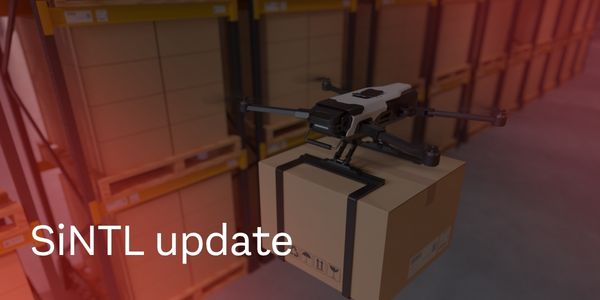
SiNTL enters real-world UAV testing

SiNTL enters real-world UAV testing

SiNTL enters real-world UAV testing with Ukrainian Government-approved drone manufacturer

We have entered into a battery evaluation agreement with Energia 2000, a Ukrainian Government-approved defence manufacturer, to test our SiNTL™ silicon anode battery technology across a range of active drone and UAV platforms.

This is our first formal defence-sector partnership and a significant step in the commercialisation of SiNTL – moving from laboratory validation into real-world operational testing in one of the world’s most active UAV development environments.

The partnership

Energia 2000 has more than 25 years of operational history and currently manufactures 72,000 military drones and UAVs per year, with plans to scale to 360,000 units per year within 24 months through its subsidiary Spectech Industries. The agreement also involves Trecenta Systems, a Ukrainian project supervision and legal services firm acting as program supervisor, funds administrator and guarantor.

Why batteries matter for drones

Battery capacity is a primary limiting factor for drone range, payload and mission duration. SiNTL has already demonstrated specific capacity of 530 mAh/g – well above graphite’s theoretical maximum of 372 mAh/g – and our program is targeting 600 mAh/g. These performance characteristics are directly relevant to the range, endurance and payload requirements of modern UAV platforms.

The testing program

The evaluation will cover fixed-wing UAVs, heavy multirotor systems and FPV strike platforms, providing us with access to five active Ukrainian drone battalions for operational evaluation, subject to final approvals. The program is structured across six stages – from SiNTL sample and cell validation through to a final qualification report and commercialisation review – with a pass/fail review at each stage before the next commences.

Successful completion is intended to form the basis for Energia 2000’s adoption of SiNTL-based batteries into its drone production.

Commercial model

We hold an exclusive global licence to the SiNTL technology and retain full commercial rights. Subject to successful testing, our commercial model is expected to include supply of SiNTL anode material, battery technology licensing, royalties on approved battery packs and platforms, and future supply arrangements with defence, UAV and aerospace customers.

We also see this partnership as a pathway to broader industry visibility — particularly with NATO-aligned nations and Tier 1 defence primes — as we continue to receive inbound interest from drone, satellite and related industry participants.

Our Executive Chairman Dr Kevin Moriarty commented:

“This programme gives us a direct and practical pathway to test SiNTL™ in one of the most demanding battery environments in the world. UAV performance is increasingly limited by battery range, endurance, charging time and reliability. SiNTL was developed to address precisely these challenges.”


Read the full ASX announcement here.

SiNTL enters real-world UAV testing

SiNTL moves from lab to market

SiNTL moves from lab to market: scale-up and full-stack battery development underway

We have commenced the scale-up phase of our SiNTL™ silicon nanoparticle anode program – a significant step in transitioning from laboratory-scale development toward commercial engagement.

We are purchasing scale-up equipment to produce manufacturer-relevant quantities of SiNTL anode material at our research partner George Washington University (GWU) in Washington D.C., where Professor Michael Wagner’s team continues to lead the technical program under an exclusive global licence.

Scale-up is designed to deliver improved material consistency and meaningfully larger production volumes: both prerequisites for the formal third-party evaluation and OEM qualification processes that characterise this stage of commercialisation.

Full-stack battery development

In parallel, we have commenced engagement with full-stack contract battery manufacturers to produce complete battery cells incorporating SiNTL anode material, optimised for drone, UAV, satellite, robotics and other target applications. These cells are intended to provide tangible real-world performance data for commercial and defence-sector qualification processes.

The drone and UAV market presents a compelling near-term entry point for SiNTL. These platforms place a high premium on energy density, payload capacity and rapid recharge – performance characteristics that SiNTL’s silicon anode approach is designed to address. The global commercial and military drone market is forecast to reach approximately US$160 billion by 2030, with the silicon anode battery market alone projected to grow from USD 0.4 billion in 2025 to USD 25.8 billion by 2035.

Market interest and OEM engagement

We have received inbound interest from companies seeking to trial SiNTL materials and have commenced discussions with drone and related industry participants – an early market signal that reinforces our commercialisation direction.

Progressing toward 600 mAh/g

Formulation optimisation and cycle life validation continue, with development advancing toward our initial 600 mAh/g target – more than 50% above conventional graphite anodes and approximately 20% above current commercial silicon-enhanced anode benchmarks.

Our production process – a low-temperature, single-step synthesis with approximately 97% demonstrated yield – is compatible with conventional lithium-ion battery manufacturing lines and avoids hazardous reagents such as hydrofluoric acid or silanes. This supports a credible path to scaled production and a clear point of differentiation from competing silicon anode technologies.

To support the next phase, we are actively seeking industry experts in battery materials commercialisation, OEM engagement, and defence and aerospace market development.

Read the full ASX announcement here.

CTO Peter Yaron said:

“The commencement of scale-up is a natural and planned next step for the SiNTL™ program. We have demonstrated the performance of the material at laboratory scale and the focus now shifts to producing consistent, higher-volume quantities that enable formal third-party evaluation and meaningful OEM engagement. This is how laboratory results become commercial outcomes.”

SiNTL™ Targets Drone and UAV Battery Market

SiNTL™ Targets Drone and UAV Battery Market

SiNTL™ Advances Toward 600 mAh/g as 14D Targets Drone and UAV Battery Market

1414 Degrees is preparing to engage with the drone and unmanned aerial vehicle (UAV) battery supply chain as the first commercial target market for SiNTL™, our silicon nanoparticle battery anode technology.

The update follows a technical visit to George Washington University (GWU) by Chief Technology and Operations Officer Peter Yaron, where SiNTL development is underway.

Performance progress

SiNTL test cells have previously achieved 530 mAh/g – 50% above conventional graphite anodes – and we are progressing toward an initial target of 600 mAh/g, with further capacity increases planned beyond that. Results will be reported as we advance.

SiNTL is being developed as a drop-in upgrade to existing graphite-based lithium-ion battery anodes. Unlike complex high-silicon anode technologies that require specialised manufacturing, SiNTL is designed to integrate with conventional battery production processes – removing a significant barrier to adoption for manufacturers.

Entering the drone market

Based on current performance, we will engage with participants in the drone and unmanned aerial vehicle (UAV) battery supply chain – a market forecast to reach approximately US$160 billion by 2030, driven by growth in commercial logistics, agriculture and military and defence applications.

Drones prioritise energy density, with SiNTL offering the potential to extend range, increase payload capacity and reduce charging times. Cycle life requirements for drone applications are also lower than those for electric vehicle batteries, making this a logical and achievable first market entry point.

Work is progressing on process optimisation and defining a scalable manufacturing pathway. Development toward the higher cycle life thresholds required for EV battery applications continues in parallel.

CTO Peter Yaron said:

SiNTL™ has a genuinely differentiated position – not just in performance but in how simply it can be manufactured. We’re now moving beyond pure materials development and into the next phase – aligning our experimental program with real-world applications and defining what a scalable production process looks like.”

Advancing Aurora and SiNTL: $2.69m placement secured

Advancing Aurora and SiNTL: $2.69m placement secured

1414 Degrees has secured firm commitments to raise $2.69 million (before costs) through a placement to sophisticated and institutional investors.

The funding will support near-term commercial and technical milestones across the Company’s integrated clean energy platform, with a focus on the Aurora Energy Precinct and SiNTL™ battery materials program.

Advancing Aurora

Funds will be used to progress Aurora’s transmission connection, a key step in enabling the approved 140 MW / 280 MWh Battery Energy Storage System (BESS).

The Company will also move to regain 100% ownership and control of the Aurora Precinct, positioning the project for further development and customer engagement.

Aurora remains a strategically located energy and industrial site designed to support firmed renewable electricity for high-demand users, including industrial and energy-intensive operations.

Progressing SiNTL

Alongside Aurora, the Company will continue advancing its SiNTL™ silicon anode materials program, including:

  • scale-up activities
  • preparation for customer engagement
  • ongoing performance development

This work is aimed at positioning SiNTL within the growing market for higher energy density lithium-ion batteries.

Integrated platform

1414 Degrees continues to develop its broader platform across:

  • grid-scale battery storage (BESS)
  • thermal energy storage (SiBox®)
  • hydrogen and carbon production (SiPHyR®)
  • advanced battery materials (SiNTL™)

These technologies are designed to work together, leveraging silicon-based systems to store, convert and enhance energy across industrial applications.

Executive Chairman Dr Kevin Moriarty said,

“This Placement enables us to progress key near-term milestones across both Aurora and SiNTL, with a clear focus on commercial outcomes.

At Aurora, we are advancing transmission connection and customer engagement, while our SiNTL program continues to move toward market-facing milestones.

With multiple workstreams underway, the Company is entering a period of increased activity across both infrastructure and technology development.”

SiNTL™ Targets Drone and UAV Battery Market

SiNTL Silicon Anode Program Ahead of Schedule

We have surpassed a key performance milestone in our silicon nanoparticle battery materials program, achieving 530 mAh/g specific capacity in laboratory testing.

The result exceeds the previously announced 500 mAh/g target and places us ahead of schedule toward our 600 mAh/g development goal, which would represent around a 20% performance improvement over current commercial silicon-enhanced anode benchmarks.

Testing was conducted at George Washington University under 1414 Degrees’ exclusive global licence for the SiNTL™ silicon nanoparticle technology.

The 530 mAh/g result was achieved under controlled test conditions using a four-hour charge/discharge cycle between 20–80% state of charge.

Graphite, which currently dominates lithium-ion battery anodes, has a theoretical capacity of approximately 372 mAh/g, limiting further gains in battery energy density. Silicon offers significantly higher potential capacity but has historically faced commercial challenges due to expansion during lithium absorption.

The SiNTL process produces aluminium-coated silicon nanoparticles using a low-temperature one-step synthesis method operating between 125–180°C. The coating forms during synthesis and is designed to stabilise silicon’s expansion while maintaining conductivity.

Unlike many competing approaches that rely on chemical vapour deposition using silane gas and specialised infrastructure, the SiNTL process is designed to be compatible with existing lithium-ion battery manufacturing lines, enabling manufacturers to integrate the material without major retooling.

Executive Chairman Dr Kevin Moriarty said the result demonstrates the effectiveness of the technology approach.

“Surpassing the 500 mAh/g milestone ahead of schedule is a meaningful result for the SiNTL program,” he said. “The 530 mAh/g figure demonstrates that our aluminium-coating approach is working as designed under real test conditions and that the pathway to 600 mAh/g is credible.”

There is also a potential future integration between our SiNTL battery material technology and SiPHyR® methane pyrolysis system, which produces solid carbon alongside low-emissions hydrogen.

Combining this carbon with SiNTL silicon nanoparticles could create a streamlined production pathway for silicon-carbon composite anodes, potentially reducing processing steps and manufacturing costs.

Testing continues at George Washington University with ongoing work focused on increasing capacity, validating cycle life and assessing scalability for commercial battery applications.

Industry analysts project the global silicon anode battery market could grow from approximately USD 0.4 billion in 2025 to USD 25.8 billion by 2035, reflecting increasing demand for higher-performance batteries for electric vehicles and energy storage.

Click here to read the full ASX release

SiNTL™ Targets Drone and UAV Battery Market

SiNTL silicon anode reaches commercial benchmark ahead of schedule

1414 Degrees has achieved a major technical milestone in the development of our SiNTL™ silicon anode battery material, reaching 500 mAh/g specific capacity – the program’s first target – months ahead of schedule.

This result aligns with current best-in-class commercial silicon-enhanced anode materials, validating both the SiNTL composite architecture and low-temperature synthesis process. Importantly, we have now established a clear and repeatable development pathway toward 600 mAh/g, a level that would represent an improvement of around 20% over typical current commercial benchmarks.

Reaching this performance range is widely considered a key threshold where silicon-enhanced anodes can deliver meaningful improvements in lithium-ion battery energy density while remain gin compatible with existing manufacturing processes.

Alongside this progress, testing is underway to incorporate pristine graphitic carbon produced via our SiPHyR™ process into the SiNTL synthesis pathway. Over time, this work may support additional downstream value opportunities across our silicon platform, including battery anode production and other high-value carbon applications.

Chief Technology & Operations Officer Dr Peter Yaron said the milestone reinforces SiNTL’s commercial relevance:
“This result demonstrates that SiNTL is not just a research program — it is a commercial platform in development. As performance improves and scalability is validated, its strategic relevance to battery manufacturers and OEM supply chains becomes increasingly clear.”

The SiNTL program is underpinned by a development framework that directly links battery performance to material properties across multiple formulations. Combined with a scalable, low-temperature synthesis process compatible with existing anode manufacturing infrastructure, this approach supports a clear pathway toward production-scale manufacturing.

Click here to read the full ASX release